Tue, Sep 1
Judgment & Ethics
Please complete the tasks and readings listed below before class on Tue, Sep 1.
Required Readings
Markkula's framework gives you a general process for moving from analysis to judgment. Each card below unpacks one specific ethical tradition you can plug into that process - click a card to preview it.
Topic / Focus
Today turns from learning to judgment. Once someone can act competently, what does it take to judge whether that action is right? We use a shared scenario to test several moral frameworks against each other, asking what each one notices, what it leaves out, and why people who agree on the facts of a case can still disagree about what should be done.
The field guide’s ethical frameworks are previewed at the bottom of this page. Today we work with several of the seven; you will use all of them across the rest of the semester.
Activity: Applying a Moral Framework
Your table is assigned one framework. You will hold it against three scenarios, one at a time. Each scenario is designed to sound reasonable, even beneficial, at first read – it was built or marketed to help someone. Your job is not to decide whether it’s “good” or “bad” in general. Your job is to find out where your framework agrees with the reasonable-sounding pitch, and where it doesn’t.
Your Framework
-
– Does this respect people as persons, rather than simply using them to achieve a goal?
The Core Idea
Kantian ethics is a deontological framework: it asks whether an action is right in principle, not just whether it produces good consequences. It focuses on duties, motives, and the rules behind our actions.
Kantian ethics emphasizes two ideas:
-
Treat people as ends in themselves, not merely as means. People have dignity and should not be used simply as tools for someone else’s goals.
-
Act according to rules you could accept for everyone. Kant’s categorical imperative asks whether the rule behind an action – its maxim – could be consistently applied as a universal rule.
For Kant, why we act matters as well as what happens. An action is not morally right simply because it produces a good result; it should be guided by a principle or duty that is itself morally defensible.
In AI ethics, this means asking how people are being treated, what principles guide a system or policy, and whether those principles could be accepted if they were applied broadly.
Diagnostic Questions
Respect for persons: Does this system treat anyone merely as a means to an end rather than as a person with dignity and autonomy?
Universalization: Could I accept the rule behind this system if every similar actor or system followed it?How This Framework Is Often Applied
Kantian ethics is often used to identify moral duties and limits that should not be overridden simply because doing so would produce useful results.
It asks whether people are being respected as persons and whether the principle or intention behind an action is morally defensible. A policy may produce a desirable outcome, for example, while still relying on deception, coercion, or treating people merely as instruments.
Kantian reasoning also asks whether the underlying rule could be accepted as a rule for everyone. In AI ethics, this can apply to practices involving consent, surveillance, manipulation, data collection, or the use of people’s labor and information.
Strengths and Weaknesses
What This Lens Reveals
Kantian ethics is especially strong at identifying questions of:
- Dignity – whether people are treated as ends in themselves.
- Autonomy – whether people can make meaningful choices.
- Motive and principle – whether an action is guided by a morally defensible reason, rather than merely producing a desirable outcome.
- Consistency – whether the rule behind an action could apply to everyone.
- Duties and limits – whether some actions are wrong even when they produce good outcomes.
In AI ethics, this lens helps ask whether systems respect people’s agency and whether the principles guiding them are morally defensible.
What It Can Miss
Kantian ethics is less well suited to questions about:
- Consequences – how much harm or benefit results.
- Tradeoffs – how to compare competing harms.
- Distribution – who benefits and who bears the burdens.
- Conflicting duties – what to do when moral obligations point in different directions.
Key Thinkers
 Public domain
Immanuel Kant (1724–1804) is the originator of the framework. His Groundwork for the Metaphysics of Morals (1785) introduces the categorical imperative – the principle that one should act only according to rules one could will to be universal laws, and that rational persons must never be treated merely as means. These two formulations are the most frequently applied in ethical analysis of AI.
W.D. Ross (1877–1971) developed a more pluralist form of deontology in The Right and the Good (1930), replacing absolute duties with “prima facie” duties – obligations that normally apply but may be outweighed by stronger competing obligations. This more flexible version is often more tractable in real-world cases where duties conflict.
 CC BY-SA 4.0, Wikimedia
Christine Korsgaard (1952–) is a major contemporary Kantian moral philosopher, defending and extending Kant's framework in The Sources of Normativity (1996) and Creating the Kingdom of Ends (1996). Her work engages directly with challenges to Kantian ethics from consequentialism and constructivism.
 CC BY 3.0, Wikimedia
Onora O'Neill (1941–) has applied Kantian ethics to questions of trust, information, and institutions, arguing that autonomy requires more than the absence of coercion – it requires the conditions under which rational agency is possible. Her work is directly relevant to informed consent and transparency in algorithmic systems.
Sources
- Immanuel Kant, Groundwork of the Metaphysics of Morals, trans. Mary Gregor (Cambridge: Cambridge University Press, 1998; orig. 1785).
- Christine Korsgaard, Creating the Kingdom of Ends (Cambridge: Cambridge University Press, 1996).
- Stanford Encyclopedia of Philosophy, “Kant’s Moral Philosophy.”
Further Reading (More Accessible):
- Andrew Chapman, “Kantian Deontology: Immanuel Kant’s Ethics,” 1000-Word Philosophy.
- Ethics Unwrapped (UT Austin), “Deontology.”
-
-
– Does this respect individual freedom and voluntary choice?
The Core Idea
Libertarian ethics asks whether people are free to make their own choices without coercion. It emphasizes individual liberty, voluntary agreement, and strong limits on when governments or other actors may interfere.
Libertarianism emphasizes three ideas:
- Individual freedom matters. People should generally be free to make their own choices (typically against “moral legislation”).
- Consent should be voluntary. Agreements are legitimate when people enter them freely rather than through force or coercion.
- Property and personal rights place limits on others. Individuals have claims over their bodies, labor, property, and resources that should not be overridden simply to produce a better social outcome.
Many libertarians therefore favor limited government, strong property rights, and market exchange over centralized control or redistribution. In AI ethics, this means asking whether people meaningfully chose to participate in a system, whether they can opt out, and whether their rights or property are being overridden.
Diagnostic Questions
Freedom and consent: Are people participating voluntarily, or are they being coerced or left without meaningful alternatives?
Interference and rights: Does this system or policy override individual liberty, property, or choice in ways that are justified?How This Framework Is Often Applied
This framework is often used to argue for limited government, market exchange, and strong protection for property rights. In the property-rights tradition associated with Robert Nozick, taxation to fund social services requires the state to take resources from people who did not individually agree to give them. On this view, the state’s role is narrow: protecting people from force, fraud, and rights violations rather than redistributing resources to achieve a social outcome. Helping people in need may still be morally admirable, but libertarians often argue that it should come through voluntary giving, mutual aid, families, communities, or private organizations rather than compulsory taxation.
This is a political and institutional conclusion built on a normative premise about coercion and ownership. It is not the only possible view of liberty: some thinkers argue that poverty, illness, or lack of education can leave people without meaningful options, and that public services can therefore expand practical freedom. In AI debates, libertarian reasoning often appears in arguments about regulation, surveillance, data ownership, market competition, and the right to opt out.
Strengths and Weaknesses
What This Lens Reveals
Libertarian ethics is especially strong at identifying questions of:
- Freedom – whether people can make their own choices.
- Consent – whether participation and agreements are genuinely voluntary.
- Coercion – whether people are being forced or pressured into actions.
- Individual rights – whether personal liberty, property, or autonomy is being overridden.
- Government power – whether restrictions or regulations go beyond what is necessary to prevent harm.
In AI ethics, this lens is useful for examining consent, surveillance, data ownership, regulation, and the ability to opt out.
What It Can Miss
Libertarian ethics is less well suited to questions about:
- Unequal power – whether a formally voluntary choice is meaningful when one party has far more power or resources.
- Distribution – whether benefits and burdens are shared fairly.
- Collective goods – when solving a problem requires shared institutions, public resources, or coordinated action.
- Structural inequality – how past or existing inequalities shape the choices people actually have.
- Third-party harms – when people are affected by choices or agreements they never participated in.
Its conclusions can also depend on what counts as coercion and what counts as a genuinely voluntary choice.
Key Thinkers
 Public domain
John Locke (1632–1704) established the foundational libertarian premise: individuals have natural rights to life, liberty, and property that governments exist to protect, not override. His account of property rights and the limits of legitimate government shaped the liberal tradition from which both libertarianism and rights-based ethics draw.
 Public domain
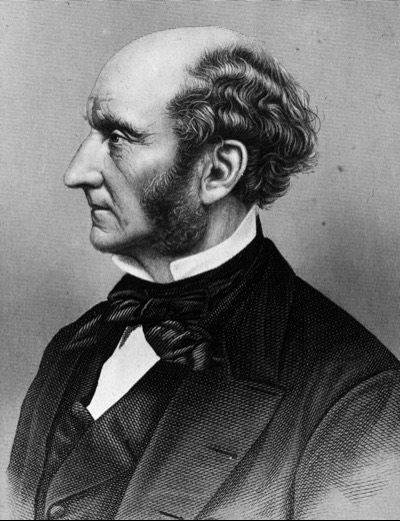
John Stuart Mill (1806–1873) articulated the harm principle in On Liberty (1859) – that the only legitimate basis for restricting individual freedom is preventing harm to others. This principle underlies most libertarian arguments against paternalistic regulation of technology.
 Public domain
Robert Nozick (1938–2002) is a central modern libertarian political philosopher. In Anarchy, State, and Utopia (1974), he defended a minimal state and argued that holdings are just when they arise through just acquisition and voluntary transfer. His framework provides a sharp contrast with Rawlsian arguments for redistributive justice.
 CC BY-SA 3.0, Wikimedia
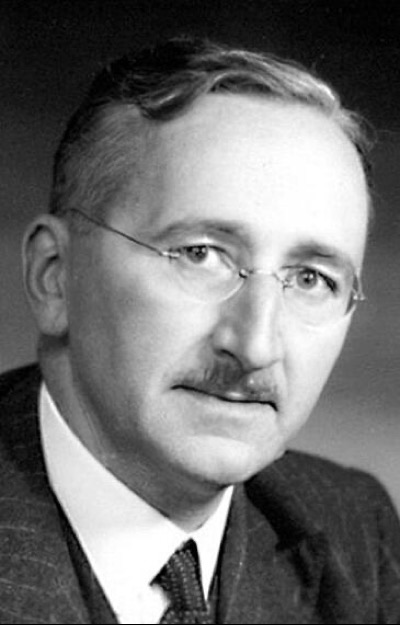
Friedrich Hayek (1899–1992) contributed the epistemic argument for markets over planning in The Constitution of Liberty (1960) and The Road to Serfdom (1944): decentralized price signals aggregate more information than any central authority can, making market outcomes more efficient and more fair than designed alternatives. Hayek's defense of decentralized knowledge and skepticism toward centralized planning remains influential in arguments favoring markets and limited regulation.
Sources
- Robert Nozick, Anarchy, State, and Utopia (New York: Basic Books, 1974).
- Friedrich A. Hayek, The Constitution of Liberty (Chicago: University of Chicago Press, 1960).
- Stanford Encyclopedia of Philosophy, “Libertarianism.”
Further Reading (More Accessible):
- “Robert Nozick’s ‘Wilt Chamberlain’ Argument for Libertarianism,” 1000-Word Philosophy.
-
– Would this still seem fair if you didn’t know which position you would occupy?
The Core Idea
Rawlsian ethics asks whether a system is fair to people who occupy different social positions. It focuses on the basic rules and institutions that distribute opportunities, benefits, and burdens.
Rawlsian ethics emphasizes three ideas:
- Choose fairly from behind a “veil” of ignorance. Imagine designing a system without knowing your own race, class, gender, ability, or social position. Would you accept its rules if you might occupy any position within it?
- Protect equal basic liberties. A fair society must secure fundamental freedoms for everyone, not trade them away simply because doing so benefits others.
- Inequalities must help the least advantaged. Unequal benefits or burdens are justifiable only when they improve the position of people who are worst off.
In AI ethics, this means asking how a system distributes benefits, burdens, errors, and opportunities – especially for people who are already disadvantaged.
Diagnostic Question
Would you accept this system's design if you did not know which position you would occupy within it?
How This Framework Is Often Applied
This framework is often used to evaluate the fairness of laws, public institutions, and systems that distribute important opportunities or risks. In AI, it is useful for examining hiring tools, education systems, healthcare triage, benefit eligibility, predictive systems, and any design choice that produces different error rates or consequences for different groups.
Rawlsian reasoning asks more than whether a system benefits most people on average. It asks whether people designing the system would accept its rules without knowing whether they would be well served or badly harmed by them. It also asks whether an unequal distribution improves conditions for those who are least advantaged, rather than merely making the better-off even better off.
Strengths and Weaknesses
What This Lens Reveals
Rawlsian ethics is especially strong at identifying questions of:
- Fairness – whether the rules of a system are acceptable from different social positions.
- Distribution – who receives benefits, opportunities, and protections, and who bears risks or errors.
- The least advantaged – whether a system improves conditions for people who are already worst off.
- Institutions – how rules, policies, and systems structure people’s life chances.
In AI ethics, this lens helps move analysis beyond average performance to ask how outcomes are distributed and whether unequal outcomes are fair.
What It Can Miss
Rawlsian ethics is less well suited to questions about:
- Personal relationships and care – how systems affect particular relationships, dependencies, and responsibilities.
- Dignity and rights – whether an action is wrong even when a distribution seems fair.
- Identifying disadvantage – who counts as least advantaged when inequalities overlap or take different forms.
- Practical decision-making – how to turn a thought experiment into a process when real people have known interests and unequal power.
The veil of ignorance is a thought experiment, not a procedure. It is most useful when paired with evidence about actual effects and with attention to the people who will live with a system’s consequences.
Key Thinkers
 Public domain
John Rawls (1921–2002) is the central figure. His A Theory of Justice (1971) introduced the veil of ignorance and the difference principle – that inequalities are only just if they benefit the least advantaged members of society. It became one of the most influential works of twentieth-century political philosophy. His later Political Liberalism (1993) refined the theory for pluralist societies.
 CC BY 2.0, Wikimedia
T.M. Scanlon (1940–) developed a related but distinct contractualist framework in What We Owe to Each Other (1998), arguing that an act is wrong if it violates principles that no one could reasonably reject. His approach shifts from hypothetical choice to reasonable rejection, making it more tractable for specific cases.
 Photo: Harvard Catalyst. Unconfirmed license.
Norman Daniels (1942–) extended Rawlsian theory to healthcare and other institutions in Just Health (2008), showing how the framework applies to the design of systems that affect life prospects – a direct application to AI systems operating in healthcare, education, and social services.
 CC BY-SA 4.0, Wikimedia (fan illustration)
Iris Marion Young (1949–2006) offered an influential critique of Rawlsian distributive frameworks in Justice and the Politics of Difference (1990), arguing that justice requires attending to structural oppression and cultural recognition, not only the distribution of goods. Her work is a useful counterpoint to purely distributional thinking.
Sources
- John Rawls, A Theory of Justice (Cambridge, MA: Belknap Press of Harvard University Press, 1971).
- John Rawls, Political Liberalism (New York: Columbia University Press, 1993).
- Stanford Encyclopedia of Philosophy, “Original Position.”
Further Reading (More Accessible):
- Ben Davies, “John Rawls’ A Theory of Justice,” 1000-Word Philosophy.
- Ethics Unwrapped (UT Austin), “Veil of Ignorance.”
-
– Does this produce the greatest overall benefit while minimizing harm?
The Core Idea
Utilitarianism asks which action or policy is expected to produce the greatest overall well-being. It evaluates choices by their consequences: the benefits and harms they create for everyone affected.
Utilitarianism emphasizes three ideas:
- Consequences matter. Actions should be judged by the good and harm they produce, not only by their intentions or by whether they follow a rule.
- Consider all affected interests. Benefits and harms should be considered impartially, rather than treating the interests of a powerful group as decisive.
- The overall balance matters. The better choice is the one expected to produce more well-being and less suffering overall.
In AI ethics, this means asking what consequences a system is likely to produce, who benefits and who is harmed, and whether the overall balance justifies deployment.
Diagnostic Questions
Overall outcomes: Is this system expected to produce more well-being than harm for everyone affected?
Measuring consequences: What counts as a benefit or harm, and who decides?How This Framework Is Often Applied
This framework is often used in policy and organizational decisions that compare expected costs and benefits. In AI, it appears in claims that a system improves outcomes on average, reduces total error, saves time or money, or helps more people than it harms. It can support decisions about whether to deploy a system, which threshold to set, or how to allocate limited resources.
These claims combine several kinds of judgment. Evidence that a system reduces errors is a descriptive claim. Deciding that fewer errors or lower costs make the system worthwhile is a normative claim. Choosing which errors, costs, benefits, and affected groups count in the calculation is a political and institutional decision. A utilitarian analysis should make each of these choices visible rather than treating a metric as neutral.
Strengths and Weaknesses
What This Lens Reveals
Utilitarian ethics is especially strong at identifying questions of:
- Outcomes – what a system actually changes for people, rather than what its designers intended.
- Scale – how benefits and harms add up across everyone affected.
- Tradeoffs – what is gained, lost, or put at risk by choosing one option over another.
- Evidence and uncertainty – what we know about likely consequences and what evidence would change the judgment.
In AI ethics, this lens is useful for comparing possible designs, deployment choices, thresholds, and policies when their consequences can be investigated.
What It Can Miss
Utilitarian ethics is less well suited to questions about:
- Rights and dignity – whether an action is wrong even if it produces a large overall benefit.
- Distribution – whether benefits for many can justify serious harm concentrated on a few people or groups.
- Measurement – which benefits and harms resist being counted, compared, or translated into a common metric.
- Power – who gets to define success, choose the metric, and decide which consequences matter.
Its conclusions can shift sharply when predictions, measurements, or assumptions about whose interests count change. Care ethics, Rawlsian reasoning, and Kantian ethics each foreground concerns that aggregate analysis can leave in the background.
Key Thinkers
 Public domain
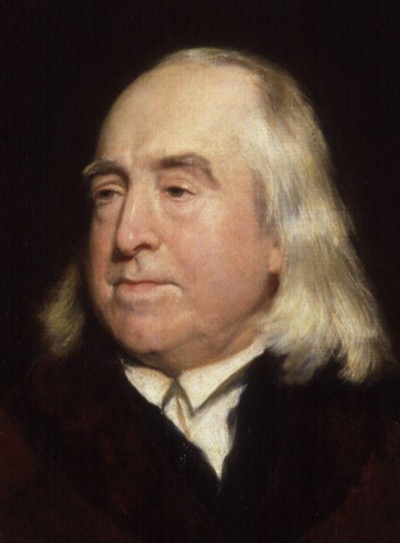
Jeremy Bentham (1748–1832) introduced the principle of utility and the hedonic calculus – the idea that pleasure and pain can be summed to determine the right action. His Introduction to the Principles of Morals and Legislation (1789) established the utilitarian framework and explicitly applied it to law and governance.
Public domain
John Stuart Mill (1806–1873) refined Bentham's utilitarianism, distinguishing between higher and lower pleasures and introducing the harm principle – that liberty should only be restricted to prevent harm to others. His Utilitarianism (1863) remains the most widely read statement of the view.
 CC BY 3.0, Wikimedia
Peter Singer (1946–) is one of the most influential contemporary utilitarian philosophers, applying the framework to animal welfare, global poverty, and effective altruism. His work demonstrates both the reach of utilitarian reasoning and its tendency to produce conclusions that challenge conventional moral intuitions.
 Public domain
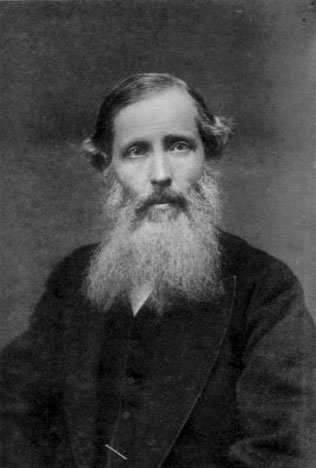
Henry Sidgwick (1838–1900) provided the most systematic philosophical defense of utilitarianism in The Methods of Ethics (1874), grappling seriously with the tension between utilitarian conclusions and common-sense morality.
Sources
- Jeremy Bentham, An Introduction to the Principles of Morals and Legislation (London: T. Payne and Son, 1789).
- John Stuart Mill, Utilitarianism (London: Parker, Son, and Bourn, 1863).
- Stanford Encyclopedia of Philosophy, “Consequentialism.”
Further Reading (More Accessible):
- Ethics Unwrapped (UT Austin), “Utilitarianism.”
For each scenario below, answer the same four questions from your framework’s point of view:
- What does your framework notice first about this scenario?
- Using the “Questions to Ask” for your framework, what do you still need to know that isn’t in the scenario?
- What verdict does your framework point toward, and how confident is it?
- What is your framework built to miss here? What would a different lens catch that yours won’t?
Be ready to give the rest of the class: your framework, one scenario’s verdict, and the one thing your framework doesn’t ask about.
Scenario 1: Disaster Relief Allocation
After a major hurricane, a county has fewer temporary housing units than displaced households.
Local officials create a priority system using several factors, including medical needs, household size, age, and the extent of property damage. The goal is to direct limited housing to people who are likely to need it most.
Households with lower priority remain eligible, but may have to wait until more units become available.
Scenario 2: Health-Risk Prediction
A health system uses an algorithm to identify patients who may benefit from additional care-management services.
The system reviews information such as diagnoses, prior hospital visits, medications, and healthcare use, then assigns each patient a risk score. Patients with higher scores may receive additional outreach, follow-up appointments, or support from care coordinators.
The goal is to focus limited staff and resources on patients who appear most likely to need additional help.
Report Back
Share Out (Whole Class)
Examine each table’s analysis framework’s one-sentence verdict on that scenario, so the room hears all four verdicts on the same case back to back.
- Where did the frameworks agree? Where did they split?
- Did any single scenario change your mind about which framework you’d want deciding it, if you had to pick one?
What to Submit
complete the paired career-module homework. Open the homework
Before next class
| Career Module | Career Module 1: PathwayU Reflection | View |