Governance
How to Use Anticipatory Governance
A practice walkthrough for asking governance questions before an AI system becomes infrastructure.
Practice Scenario: Dorm Hallway Anomaly Detection
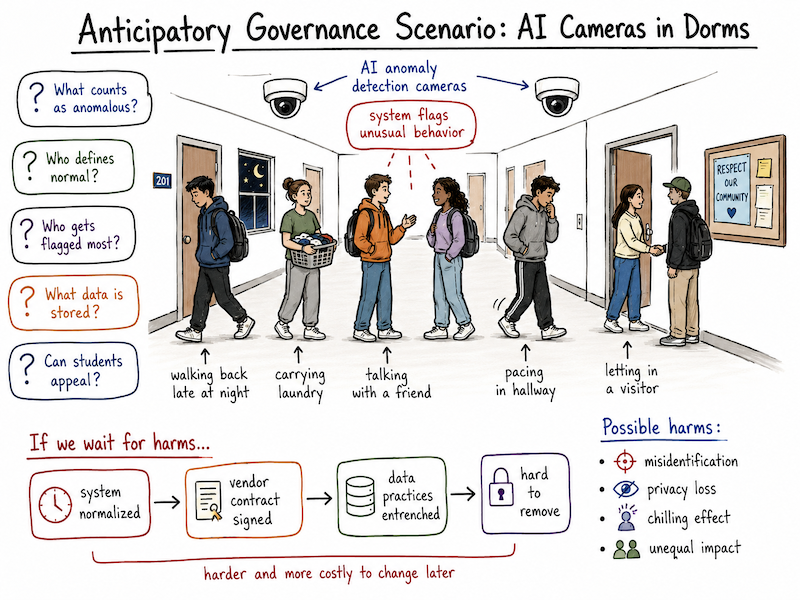
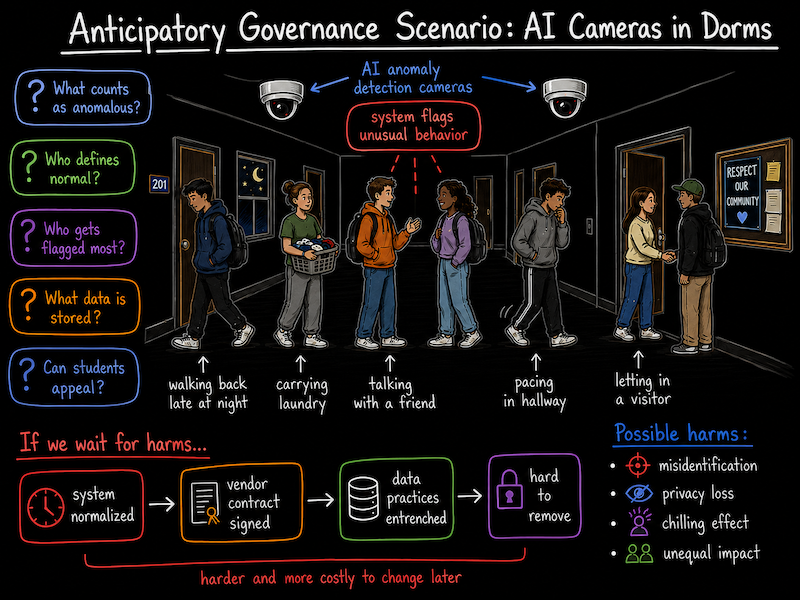
A college campus wants to install AI-powered cameras in dorm hallways. The system would flag unusual behavior and alert housing staff when something might be wrong.
Supporters say the system could improve student safety, speed up emergency response, and help the campus notice repeated problems earlier.
The governance question is not only whether the system can detect unusual behavior. It is also whether the campus should approve it, pause it, redesign it, or reject it before the system becomes part of everyday residential life.
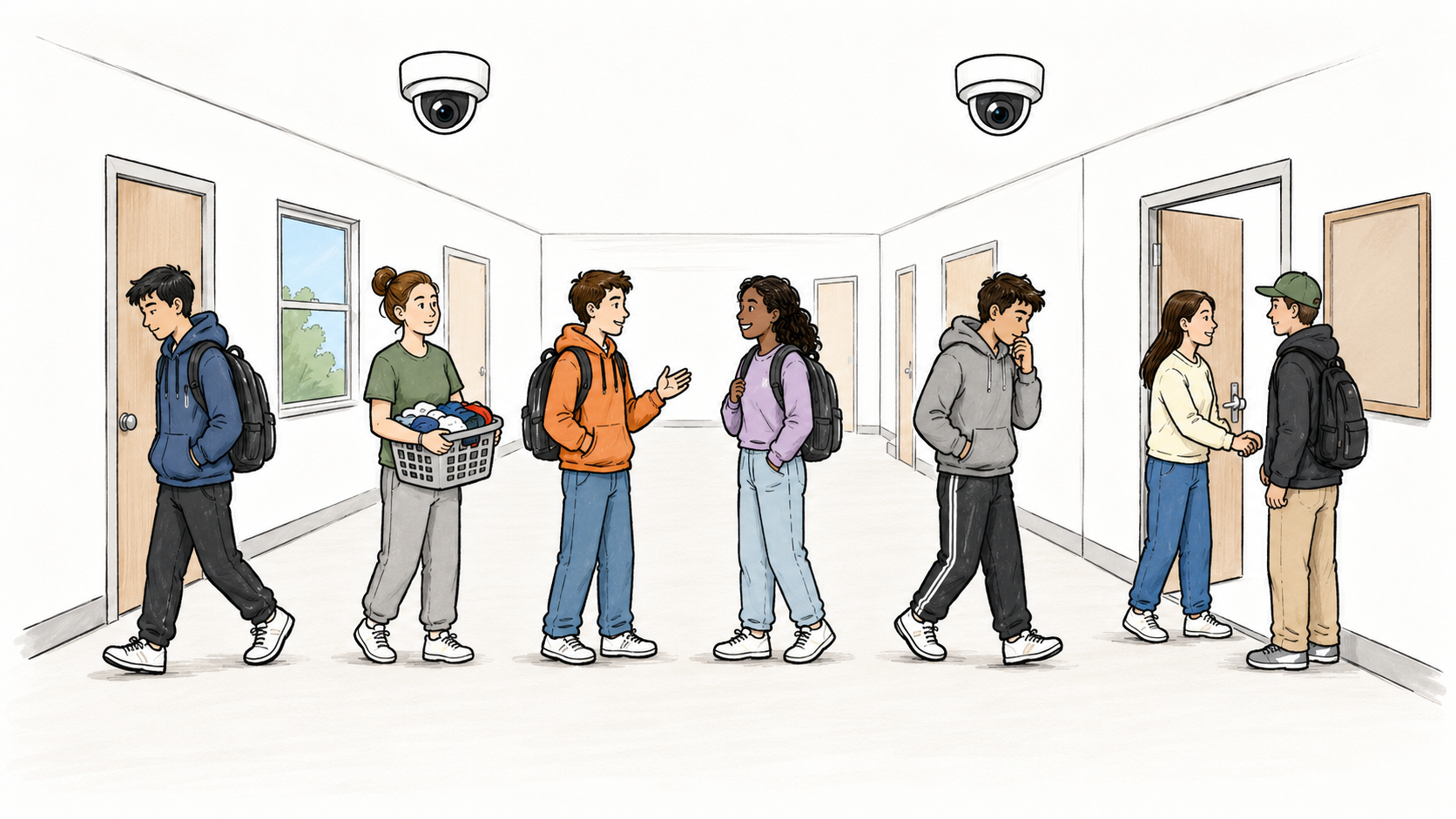
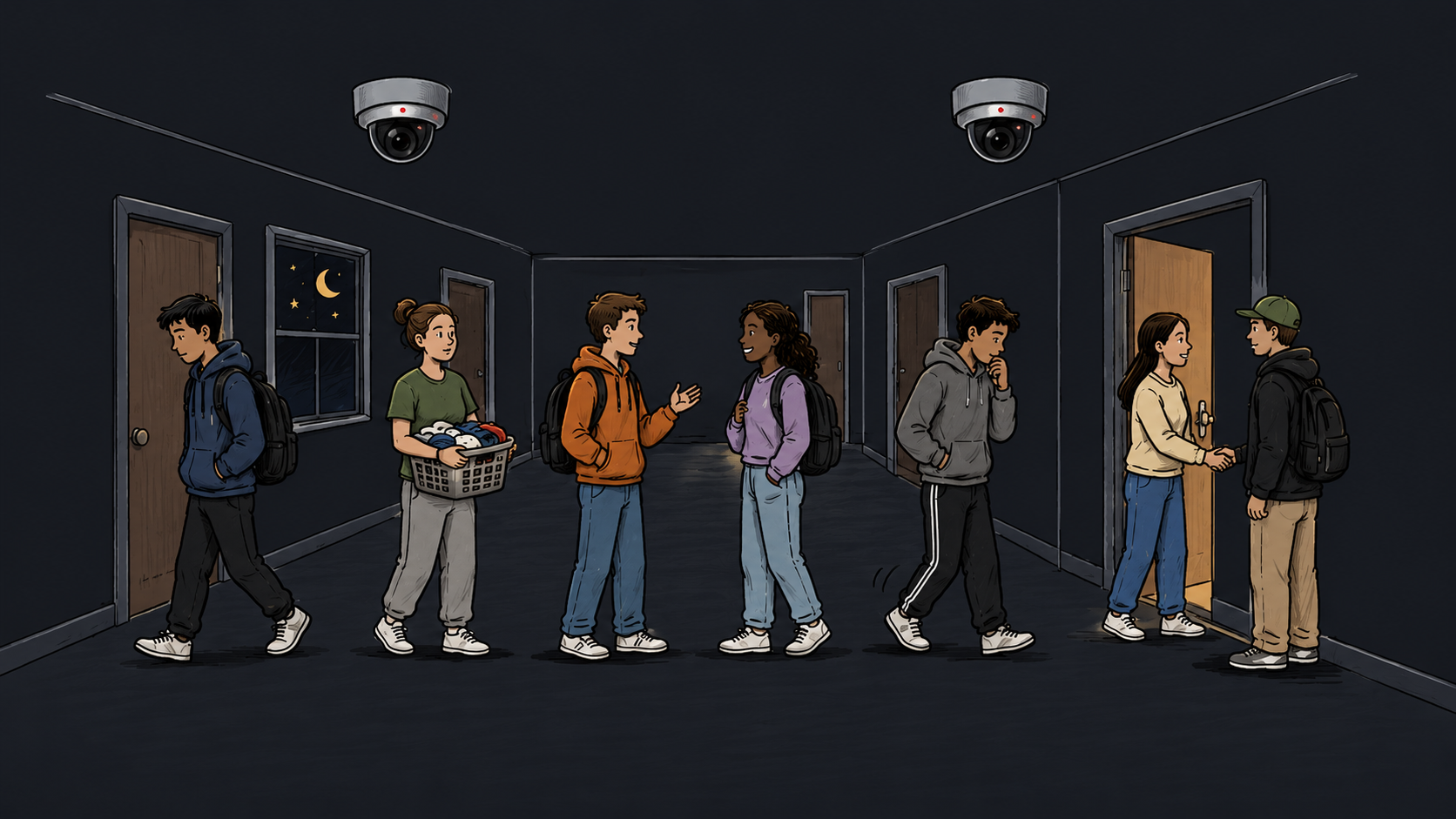
What should the campus do: approve it, pause it, redesign it, or reject it?
Before reading further, write down your first answer and one unintended consequence you think the proposal might create.
Step 1: Identify What Is Being Proposed
Start by describing the system in plain language before debating whether it is good or bad.
- What technology is being proposed?
- What problem is it supposed to solve?
- What would count as success?
- What data, sensors, models, thresholds, and alerts are involved?
Step 2: Ask What Choices Are Still Open
Anticipatory governance starts by identifying what can still be changed before deployment.
- Does the system have to be used at all?
- Could it be piloted, limited, paused, redesigned, or rejected?
- Could the location, data collection, retention policy, or alert process be changed?
- Could the campus set hard limits on how the system is used?
- Could a non-surveillance alternative address the same concern?
Step 3: Identify Stakeholders and Power
Next, identify who is affected and who gets to decide.
- Who proposed the system?
- Who approves the purchase or deployment?
- Who is monitored by it?
- Who receives alerts and decides what they mean?
- Who can object, appeal, or contest a flag?
- Who is missing from the decision?
Step 4: Examine Risks, Benefits, and Tradeoffs
This step asks students to take both the strongest claimed benefits and the most serious risks seriously.
Possible Benefits
Faster Emergency Response
Faster response to emergencies or urgent situations
Click to flipFaster Emergency Response
A hallway monitoring system might help staff notice medical emergencies, assaults, unauthorized entry, or escalating conflict more quickly than they otherwise would.
Repeated Safety Problems Become Visible
Earlier identification of repeated safety concerns
Click to flipRepeated Safety Problems Become Visible
Aggregated alerts might help the campus notice recurring problems such as understaffed hours, poorly lit hallways, or repeated access issues that existing systems are missing.
Support for Students at Risk
Support for students who may be isolated, distressed, or at risk
Click to flipSupport for Students at Risk
A campus might argue that anomaly detection could help identify students who appear to be in distress or in need of urgent intervention before a crisis becomes more serious.
Feedback on Existing Safety Practices
Better information about whether current safety practices are working
Click to flipFeedback on Existing Safety Practices
The campus may claim that the system could reveal where response procedures, staffing patterns, or existing safety policies are failing.
Possible Harms
Privacy Loss
Privacy loss in residential spaces
Click to flipPrivacy Loss
Dorm hallways are part of students' living environment. Monitoring them can expose routines, relationships, distress, and vulnerable moments that students reasonably expect not to be continuously analyzed.
Unequal Impact
Unequal impact on students whose routines differ from dominant patterns
Click to flipUnequal Impact
Students with different schedules, disabilities, caregiving responsibilities, cultural practices, or stress patterns may be flagged more often because the system's baseline reflects a narrower idea of what counts as normal.
Chilling Effects
Chilling effects on movement, social life, and help-seeking
Click to flipChilling Effects
Students may avoid normal behavior because they are unsure how the system will interpret it. Surveillance can change the very environment it claims only to observe.
Misidentification
Misidentification or overreaction to ordinary behavior
Click to flipMisidentification
False alerts can lead to embarrassment, escalation, discipline, police involvement, or loss of trust even when the underlying behavior was harmless.
Repurposing
Repurposing of data beyond the original safety goal
Click to flipRepurposing
Data collected for safety can later be used for discipline, housing disputes, policing, attendance questions, or analytics that students never meaningfully agreed to.
Overreliance
Overreliance on automated alerts
Click to flipOverreliance
Staff may begin to trust the system's alerts more than student testimony, local context, or their own judgment, especially if the system is marketed as objective.
Step 5: Ask Governance Questions
Once the system is described and the tradeoffs are visible, move to concrete governance questions.
Questions About Control
Who Defines “Normal”?
Who defines normal dorm behavior?
Click to flipWho Defines “Normal”?
Anomaly detection systems need a baseline. That baseline may be shaped by vendors, administrators, housing staff, security officers, or past data rather than by the students who live there.
What Happens to the Data?
What data is stored, and can it be repurposed?
Click to flipWhat Happens to the Data?
Even if the stated purpose is safety, stored data can migrate into discipline, policing, disputes, analytics, or other forms of monitoring unless hard limits are set in advance.
Who Gets the Alert?
Who receives alerts, and what are they expected to do?
Click to flipWho Gets the Alert?
Alerts do not act on their own. They trigger institutional responses, and those responses may range from support to punishment depending on who receives them.
Can Students Contest a Flag?
Can students understand, appeal, or contest a flag?
Click to flipCan Students Contest a Flag?
A system that affects students needs a clear process for review, explanation, challenge, and repair when it gets something wrong.
Questions About Boundaries
Where Are the Limits?
Are there places where cameras should never be used?
Click to flipWhere Are the Limits?
A campus might allow monitoring in some settings and reject it in others. Residential spaces raise different privacy and dignity concerns than classroom or entry-point settings.
What Else Could Address the Problem?
Are there non-surveillance alternatives that could address the same safety concerns?
Click to flipWhat Else Could Address the Problem?
Better lighting, more resident support staff, clearer guest policies, emergency call systems, or restorative approaches may address the same issue without normalizing hallway surveillance.
Step 6: Consider Alternatives and Redesigns
Anticipatory governance should not stop at “Should we deploy this system?” It should also ask what else could be done.
Possible alternatives or redesigns include:
- better lighting and building design
- more resident support staff or better RA training
- clearer guest and access policies
- emergency call systems or voluntary check-in tools
- stronger mental health response capacity
- strict limits on retention, access, and downstream use if any monitoring is considered at all
This step matters because a proposed technology can crowd out other options. Once cameras are framed as the obvious answer, less invasive responses can disappear from view.
Step 7: Make a Governance Recommendation
Based on your analysis, should the campus approve, pause, redesign, or reject the system?
Support your answer with specific governance concerns:
- Which question mattered most?
- Which risk seems hardest to contain?
- Which benefit, if any, seems strong enough to justify moving forward?
- What condition would need to be met before deployment?
Connect Back
Use this walkthrough together with the core concept page: Anticipatory Governance
Related pages:
Field Guide
Browse Governance Pages
Return to the governance section of the field guide.
Back to Governance