homework
Topic 1 Synthesis: One Example, Two Lenses
Analyze one everyday example through two lenses.
Due Thu, 09/10 at 11:59 PM
Think of an example of something you have learned and explain it through two lenses.
Goal: Practice seeing the same situation in more than one way. Each lens reveals something and leaves something out.
Choose an Example
Use an example from your life or everyday life, such as:
- learning a skill
- building a habit
- picking up a social norm
- changing your mind
- learning from feedback, failure, or another person
Choose Two Lenses
Pick the two lenses that best fit your example. Click a card to preview the theory.
The Core Idea
Biological accounts of learning start from a simple hypothesis: when an organism learns something, its nervous system physically changes.
Donald Hebb proposed a foundational mechanism in 1949: when one neuron repeatedly helps fire another, the connection between them strengthens. Learning, on this account, isn’t abstract information processing happening somewhere immaterial; it is a physical modification of the nervous system produced by experience.
Basic Claim
Experience changes the nervous system, and those physical changes alter what the organism is likely to do in the future
The changes can involve how strongly neurons communicate, how responsive a pathway becomes, or, over longer periods, the physical structure of the connections between neurons.
Example: Explaining Learning
Research by Eric Kandel and his collaborators provided concrete examples of how experience can change neural signaling.
Habituation: Weakening Synaptic Connections
In Kandel’s experiments with the sea slug Aplysia, repeated gentle touches made the animal withdraw its gill less and less. This process is called habituation.
The intuition is simple: if the same stimulus keeps happening and nothing bad follows, the nervous system gradually treats it as less important. At the biological level, the neurons involved in the withdrawal reflex begin sending weaker signals to one another. Because the signal traveling through the pathway is weaker, the animal becomes less likely to respond.
Sensitization: Strengthening Synaptic Connections
Kandel and his collaborators also studied the opposite process, called sensitization. After a strong or noxious stimulus, such as a tail shock, the animal became more responsive to later stimulation. In this case, signaling between neurons became stronger, making the withdrawal response more likely.
Together, habituation and sensitization show the basic biological principle: experience can change the strength of neural responses, and those changes can alter subsequent behavior.
Longer-Term Learning
With longer-term learning, these changes can become more durable. The nervous system may not only change how strongly neurons communicate, but also make physical changes to the connections between neurons, including changes in the number and structure of synaptic connections.
This gives the biological account a physical picture of memory and learning: experience can leave lasting changes in the nervous system that affect how the organism responds later.
Why This Matters for AI
The vocabulary of machine learning is closely connected to this biological tradition. “Neural network,” “neuron,” “weights,” and “learning” all draw, directly or indirectly, on ideas developed through the study of biological nervous systems.
That connection is historically and conceptually important, but it can also be misleading. An artificial neural network does not automatically become biologically similar simply because it uses biological terminology.
The useful question is therefore not whether an AI system is called “neural,” but what actually changes when it learns.
A system might change:
- its numerical parameters or weights;
- its internal structure;
- its behavior without changing its underlying parameters;
- or some combination of these.
Those distinctions matter when someone claims that an AI system learns “like a brain.”
Tensions and Limits
The inspiration connecting artificial and biological neural networks is real but loose.
Backpropagation – the algorithm that actually trains most modern neural networks – has no known biological analogue. Nothing in a real nervous system is known to compute gradients and update connections in exactly the way backpropagation does. The shared vocabulary can therefore overstate the resemblance: a system can be called “neural” while working very differently from a nervous system.
That said, the metaphor isn’t completely unfounded, either. Biological ideas helped shape the development of artificial neural networks and continue to influence how the field thinks about connectivity, plasticity, distributed representation, and learning.
Therefore, the biological lineage is real, but the analogy breaks down in specific places.
Questions To Ask
- What changes in this system when it learns, and does that change persist?
- What mechanism produces the change?
- When a company says its AI learns “like the brain,” what specific biological mechanism is it claiming, and does the system actually implement it?
- What does the biological metaphor clarify, and what might it obscure or overstate?
Key Thinkers
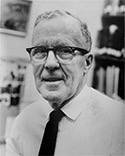
Photo: McGill University. Unconfirmed license.
Donald Hebb (1904–1985) proposed the foundational hypothesis in The Organization of Behavior (1949): when a neuron repeatedly participates in firing another, a growth process strengthens the connection between them. Later summarized as "neurons that fire together, wire together," Hebb's postulate provided an influential mechanistic account of how experience could become physical change in the nervous system.
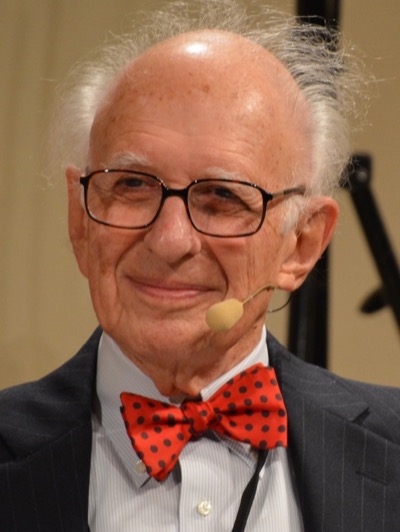
CC BY-SA 4.0, Wikimedia
Eric Kandel (1929–) provided important experimental evidence that learning and memory correspond to measurable changes in synaptic strength. His work with the sea slug Aplysia helped establish a physical, cellular account of learning and memory and contributed to his receiving the 2000 Nobel Prize in Physiology or Medicine.
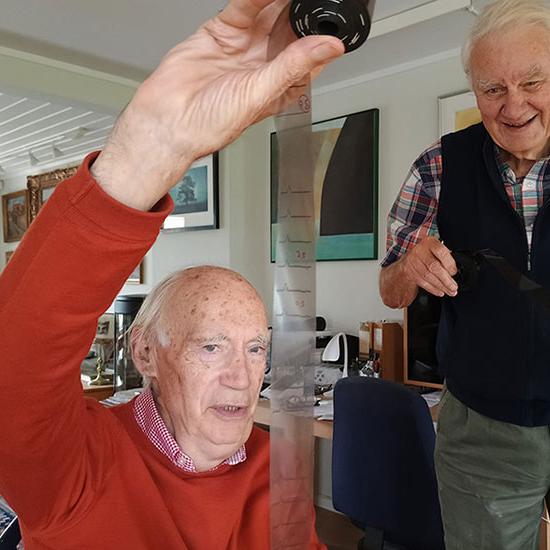
Photo: BrainFacts.org (Tim Vernimmen). Unconfirmed license.
Timothy Bliss and Terje Lømo discovered long-term potentiation (LTP) in 1973–a long-lasting strengthening of synaptic transmission in the mammalian brain following repeated stimulation. Their work provided an important experimental basis for the idea that changes in synaptic strength could contribute to the physical storage of memory.
Sources
-
Donald O. Hebb, The Organization of Behavior: A Neuropsychological Theory (New York: Wiley, 1949).
-
Eric R. Kandel, In Search of Memory: The Emergence of a New Science of Mind (New York: W. W. Norton & Company, 2006).
-
T.V.P. Bliss and T. Lømo, “Long-Lasting Potentiation of Synaptic Transmission in the Dentate Area of the Anaesthetized Rabbit Following Stimulation of the Perforant Path,” Journal of Physiology 232, no. 2 (1973): 331–356.
Further Reading (More Accessible):
- “Hebbian Learning,” The Decision Lab.
The Core Idea
Constructivism holds that learners are not passive recipients of information – they actively build their own understanding by interacting with the world and revising the mental models they already hold. Jean Piaget described this as a cycle of assimilation (fitting new information into an existing framework) and accommodation (changing the framework when new information will not fit). A child does not absorb the concept of number; they construct it through repeated encounters with objects, quantities, and error.
Constructivism therefore explains learning as a change in how a learner organizes and makes sense of experience. Piaget also argued that some forms of understanding emerge through developmental stages, as children develop new ways to reason about objects, relationships, and ideas.
Example: Explaining Learning
A child sees two equal amounts of water in identical glasses. When one is poured into a taller, narrower glass, a younger child may say the taller glass has more water. Later, the child understands that the amount stayed the same even though its appearance changed. Piaget treated this shift as evidence that the child’s mental structures had changed across developmental stages.
Assimilation and accommodation describe how such change happens. A child may initially fit new experiences into an existing idea (assimilation), but when the idea no longer works, the child must revise it (accommodation). Constructivism explains learning as this active process of building and revising an understanding of the world.
- Assimilation - fitting an idea or experience into one’s existing way of understanding the world.
- Accommodation – changing an existing mental model, or creating a new one, when an new experience does not fit.
Why This Matters for AI
Constructivism makes internal models central. For AI, it raises a question that behaviorism does not: when a system produces increasingly accurate outputs, has it built a model of its domain that helps it deal with new situations, or has it only learned patterns that fit its training data?
It is easy to confuse that question with categorization in machine learning. In supervised learning, examples are paired with target labels such as “cat” or “dog,” and the system may develop internal representations in which similar examples produce similar patterns. In unsupervised learning, a system may group examples into clusters based on similarity – but what those clusters mean depends on the data, features, objective, and human interpretation. Neither labels nor clusters are automatically Piagetian categories. For Piaget, a category is part of a learner’s actively constructed way of understanding the world: it shapes interpretation, expectation, and revision through assimilation and accommodation. An ML label, cluster, or representation may resemble one piece of that process, but by itself it does not show that the system has constructed a category in Piaget’s sense.
Caveats
Is this system constructing its own understanding by actively building and revising internal models of the world, the way a child does – or is it just fitting a function to data?
Questions To Ask
- What evidence suggests that this system has built a model of its domain, rather than only learned to produce familiar-looking outputs?
- How does the system respond when new information conflicts with its earlier patterns?
- Is the system tested and corrected through contact with the world, or trained once on a fixed dataset and then frozen?
- When someone says the system “understands,” what would count as evidence for that claim?
Tensions and Limits
Constructivism can be hard to test: almost any successful learning system can be described as having “constructed a model,” which risks making the idea less explanatory. Piaget’s account also centers the individual learner more than the social and cultural conditions that make learning possible. The Sociocultural card develops that critique. Still, constructivism gives students a useful standard for asking whether an AI system has anything like an internal model, rather than stopping at whether its outputs look right.
Key Thinkers
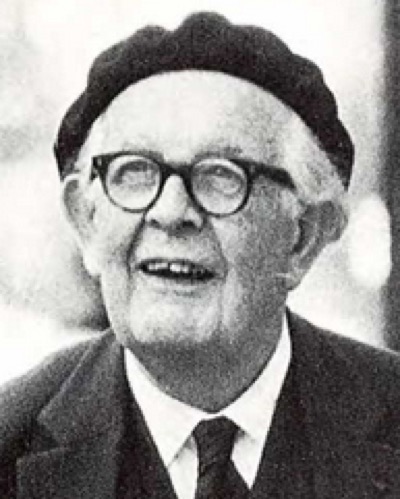 Public domain
Jean Piaget (1896–1980) spent five decades studying how children's understanding develops, describing four qualitatively distinct stages of cognitive development in works including The Origins of Intelligence in Children (1952). His central claim – that knowledge is actively built through interaction with the world, not transmitted or absorbed – became the foundation of constructivist learning theory.
John Dewey (1859–1952) was a pragmatist who argued that people learn through inquiry, action, and reflection on experience. He is not a Piagetian, but his work is an important bridge to constructivism: learners make sense of problems by testing ideas in the world, not by receiving finished knowledge. Dewey also connected this kind of shared inquiry to democratic participation.
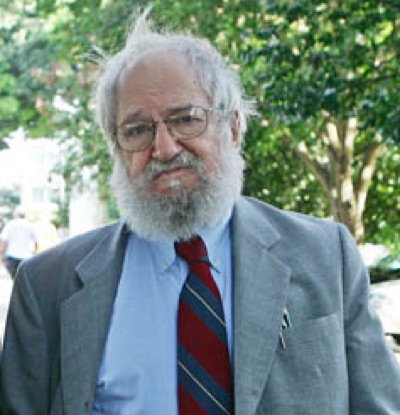 CC BY-SA 2.0, Wikimedia
Seymour Papert (1928–2016), Piaget's student and collaborator, extended constructivism directly into computing. His "constructionism" argued that learners build understanding most effectively by building external artifacts – famously through the Logo programming language he co-created for children. Papert's work sits at the exact intersection this card is concerned with: what it means for a machine, and for a child working with one, to construct knowledge.
Sources
- Jean Piaget, The Origins of Intelligence in Children, trans. Margaret Cook (New York: International Universities Press, 1952).
- John Dewey, Democracy and Education (New York: Macmillan, 1916).
- “Jean Piaget,” Encyclopædia Britannica.
Further Reading (More Accessible):
- Saul McLeod, “Piaget’s Theory and Stages of Cognitive Development,” Simply Psychology.
The Core Idea
Sociocultural theory holds that learning is fundamentally social before it is individual. Lev Vygotsky argued that higher mental functions first appear in interaction with other people and only later become internalized as independent thought. His “zone of proximal development” names the gap between what a learner can do alone and what they can do with support; learning happens in that gap, scaffolded by other people.
Later work extended this insight. Luis Moll’s “funds of knowledge” showed that households and communities – not just schools – hold rich, usable knowledge. Jean Lave and Etienne Wenger argued that expertise develops through participation in a community of practice, not through absorbing information in isolation from where it is used. Across these accounts, learning happens between people, embedded in relationships, culture, and practice.
Example: Explaining Learning
A child cannot complete a puzzle alone, but can complete it when an older sibling points out a strategy, demonstrates one move, and gradually offers less help. Later, the child completes a similar puzzle independently.
Sociocultural theory explains the change through the relationship, not only through an individual mind. The sibling provides scaffolding in the child’s zone of proximal development: the space between what the child can do alone and what the child can do with support. What begins in interaction can later become an independent capability.
Why This Matters for AI
This lens asks what is lost when a system is described as learning from data alone. Training data can contain traces of human knowledge, but it is not the same as participating in a relationship, receiving responsive guidance, or becoming accountable to a community of practice.
It also helps analyze AI used in education. If a student turns to an AI tutor instead of a teacher, peer, or mentor, what kind of scaffolding does the system provide? Whose cultural knowledge does it recognize, and whose does it treat as unfamiliar or incorrect?
The Diagnostic Question
Does this system's "learning" involve anything like the social, cultural, and relational scaffolding that sociocultural theory says learning actually requires?
Questions To Ask
- Whose knowledge and cultural experience does this system draw on, and what might be missing from its data or evaluation?
- Does the system provide responsive scaffolding, or does it only deliver information or feedback?
- Does the system participate in a practice or community, or does it only reproduce the outputs of people who do?
- When the system substitutes for a teacher, peer, or mentor, what relationships or forms of support may be lost?
Tensions and Limits
Sociocultural theory can be hard to operationalize: culture, relationships, and communities of practice resist simple measurement. It can also understate what an individual learner does with the support they receive. But it provides an important update to theories of learning that treat knowledge as something an isolated individual or system simply absorbs. A system trained on text draws on uneven traces of many human communities without participating in an ongoing relationship with any of them.
Key Thinkers
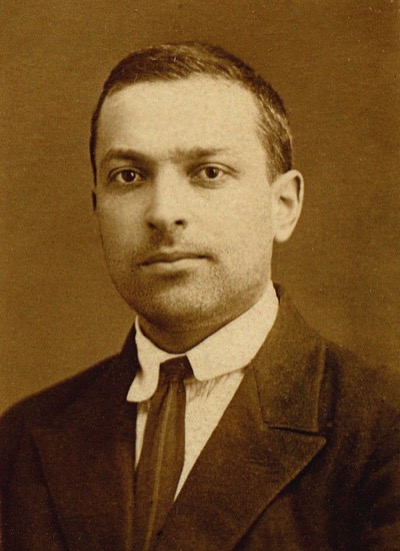 Public domain
Lev Vygotsky (1896–1934) developed sociocultural theory in 1920s–30s Soviet Russia, arguing that higher mental functions originate in social interaction before being internalized individually. His concept of the zone of proximal development, collected posthumously in Mind in Society (1978), remains the field's central organizing idea.
 Photo: University of Arizona. Unconfirmed license.
Luis Moll (contemporary) and colleagues introduced "funds of knowledge" in a 1992 study of working-class Mexican-American households in Tucson, Arizona, documenting the sophisticated practical knowledge – agricultural, mechanical, medicinal, economic – that existed in students' homes and was routinely invisible to their schools.
 CC BY-SA 2.0, Wikimedia
Jean Lave (contemporary, anthropologist) and Etienne Wenger (contemporary, computer scientist) argued in Situated Learning (1991) that expertise develops through "legitimate peripheral participation" in a community of practice – newcomers learn by doing real, if initially minor, work alongside more experienced members, gradually taking on fuller participation.
Sources
- L. S. Vygotsky, Mind in Society: The Development of Higher Psychological Processes, ed. Michael Cole et al. (Cambridge, MA: Harvard University Press, 1978).
- Luis C. Moll, Cathy Amanti, Deborah Neff, and Norma Gonzalez, “Funds of Knowledge for Teaching: Using a Qualitative Approach to Connect Homes and Classrooms,” Theory Into Practice 31, no. 2 (1992): 132–141.
- Jean Lave and Etienne Wenger, Situated Learning: Legitimate Peripheral Participation (Cambridge: Cambridge University Press, 1991).
Further Reading (More Accessible):
- Saul McLeod, “Vygotsky’s Sociocultural Theory of Cognitive Development,” Simply Psychology.
- Etienne and Beverly Wenger-Trayner, “Introduction to Communities of Practice.”
The Core Idea
Sociopolitical accounts of learning ask how learning is shaped not only by other people and cultures, but also by institutions, power, and inequality. They examine who gets to define what counts as knowledge, intelligence, achievement, or appropriate behavior – and how those definitions affect what people are taught, how they are evaluated, and what opportunities are available to them.
From this perspective, learning is never completely separate from the social structures in which it occurs. Schools, workplaces, technologies, and other institutions organize knowledge in particular ways, privilege some forms of expertise over others, and assign people to categories that can shape how they understand themselves and how others respond to them.
Paulo Freire offers one influential version of this tradition. He criticized “banking education,” in which teachers deposit knowledge into passive students, and proposed problem-posing education, in which learners participate in questioning and interpreting the conditions of their own lives. His work makes especially explicit the idea that education can either reproduce existing power relations or create opportunities to question them.
Example: Explaining Learning
A bilingual student brings knowledge and language practices from home into a writing assignment. A standardized assessment may treat those practices only as errors because they do not match its preferred version of academic English. A teacher might instead use the student’s knowledge as a resource, inviting the student to compare rhetorical choices across contexts and participate in defining what strong writing can do.
The sociopolitical account explains the difference not as a change in the student’s ability alone, but as a change in whose knowledge is recognized and who has authority to define success. It asks how institutional categories can position a learner as capable or deficient, and how learners can participate in questioning those categories.
Why This Matters for AI
AI systems used in education, hiring, or assessment do not simply measure ability. They classify, score, and recommend according to categories that people and institutions have chosen. This framework asks who defined those categories, whose knowledge fits them easily, and who is treated as deficient when they do not.
Kris Gutiérrez’s work on “third space” helps explain why learning environments should allow official knowledge and learners’ everyday knowledge to meet rather than forcing one to disappear. Na’ilah Suad Nasir’s research on racialized identities shows how school contexts shape whether young people are recognized as capable learners. Both are appropriate sources here because they connect learning directly to institutional recognition, identity, and power.
The Diagnostic Question
Whose knowledge, identity, and power are recognized or erased by how this system – or the institution deploying it – defines what counts as "learning"?
Questions To Ask
- Who defined the categories this system uses to measure learning, achievement, or capability?
- Whose knowledge, language, or ways of knowing fit those categories, and whose do not?
- Does the system give learners a meaningful role in questioning how they are classified or evaluated?
- Who benefits from the system’s definition of success, and who is positioned as deficient by it?
Tensions and Limits
Sociopolitical accounts are especially useful for explaining how learning is shaped by institutions, authority, inequality, and judgments about whose knowledge counts. But they are less well suited to explaining the cognitive or biological mechanisms through which an individual actually learns something.
Key Thinkers
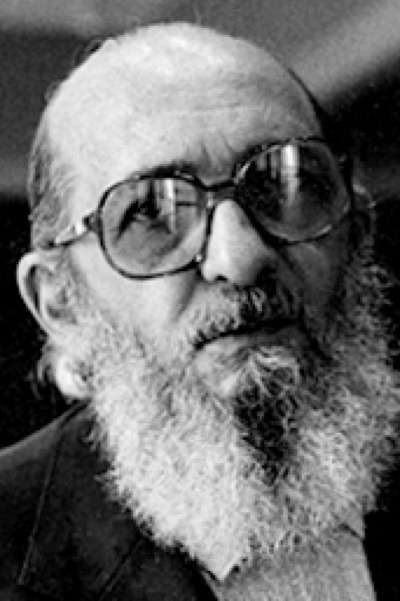 CC BY-SA 3.0, Wikimedia
Paulo Freire (1921–1997) developed his critique of "banking education" while teaching literacy to adults in Brazil in the early 1960s, publishing it as Pedagogy of the Oppressed (1970) after being exiled following a military coup. His argument that education is never neutral – it either domesticates or liberates – became foundational to critical pedagogy worldwide.
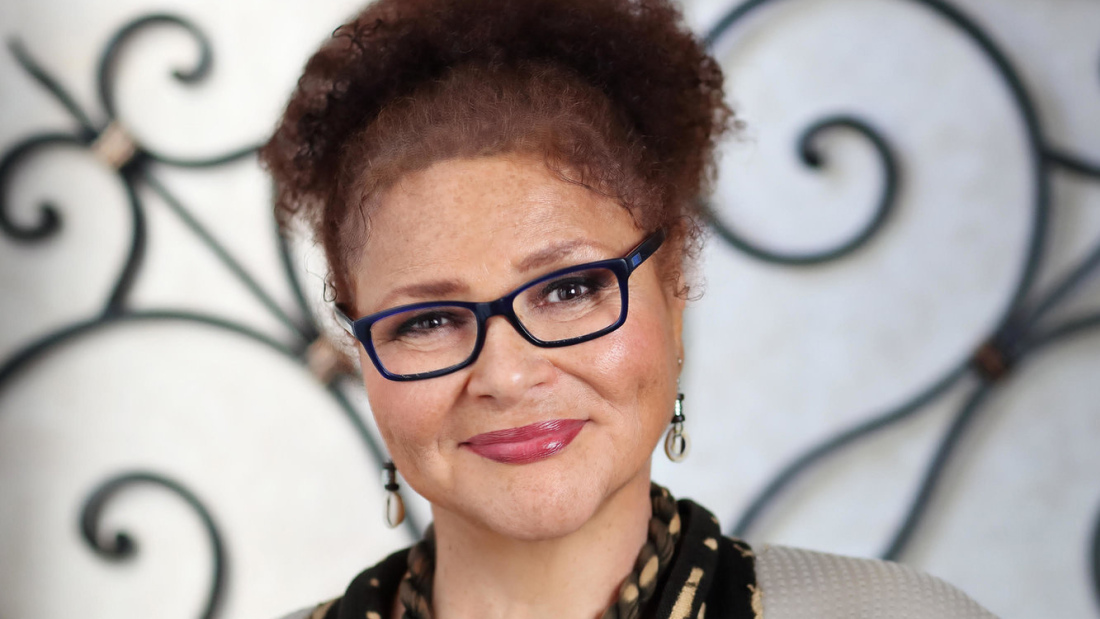 Photo: Harvard Graduate School of Education. License unconfirmed.
Lisa Delpit examines how race, language, and power shape classroom learning. In Other People's Children (1995), she argues that schools should respect students' home languages and cultural knowledge while also teaching the often-unspoken rules that powerful institutions reward. Her work asks who already knows those rules, who is excluded from them, and how teachers can make them visible without treating them as naturally superior.
 Photo: UC Berkeley. Unconfirmed license.
Kris Gutiérrez studies what happens when students' everyday knowledge meets the official knowledge of school. Her idea of a sociocritical "third space" describes a learning environment where both can be taken seriously and used together, rather than asking students to leave their own experience at the door. Her work helps us ask whether a system makes room for learners' knowledge or recognizes only the institution's version of it.
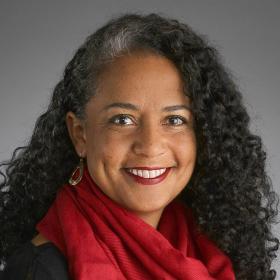 Photo: Learning Policy Institute. Unconfirmed license.
Na'ilah Suad Nasir studies how school settings shape whether young people are recognized as capable learners. In Racialized Identities (2011), she shows that students' racial identities and academic identities develop through everyday interactions, expectations, and opportunities in and beyond school. Her work challenges the idea that achievement simply reveals an ability that existed beforehand.
Sources
- Paulo Freire, Pedagogy of the Oppressed (New York: Continuum, 1970).
- Lisa Delpit, Other People’s Children: Cultural Conflict in the Classroom (New York: New Press, 1995).
- Kris D. Gutiérrez, “Developing a Sociocritical Literacy in the Third Space,” Reading Research Quarterly 43, no. 2 (2008): 148–164.
- Na’ilah Suad Nasir, Racialized Identities: Race and Achievement Among African American Youth (Stanford, CA: Stanford University Press, 2011).
- Internet Encyclopedia of Philosophy, “Paulo Freire.”
Further Reading (More Accessible):
- “Concepts Used by Paulo Freire,” Freire Institute.
Apply each lens to your example. Do not just define the lens.
What counts as a strong lens analysis?
For each lens, focus on a specific moment in your example and use the questions below to help explain what happened. You do not need to answer every question. Choose the ones that are most useful, and use at least one course concept in your explanation.
Biological
- What changed in the learner’s brain, body, or nervous system through experience or repetition?
- Did repeated experience make a response stronger, weaker, faster, or more automatic? What role did repetition, timing, intensity, or practice play in producing that change?
Psychological
- How did consequences or feedback affect what the learner did next?
- What expectation, strategy, or mental model did the learner already have?
- Did the learner fit the new experience into an existing understanding, or have to revise that understanding?
Sociocultural
- Why was learning this important in the first place – what activity, relationship, role, or community made it matter?
- What activity, relationship, role, or community made this kind of learning important?
- Who helped the learner do something they could not yet do alone, and how?
- What knowledge, tools, language, routines, or experiences did the learner bring or gain through participation with others?
Socio-political
- Who had the authority to decide what counted as correct, knowledgeable, skilled, or successful?
- Whose knowledge or way of doing things was recognized as legitimate, and whose was overlooked?
- How did institutional categories, rules, or power shape the learner’s opportunities to learn or demonstrate what they knew?
In other words, do not just name or define a theory. Use the lens to explain how learning happened in your example and what that lens helps you notice.
Make a 4-Slide Deck
Keep each slide concise. Use short phrases or 1–2 sentences per prompt. You are welcome to just use visuals for the slides and include more detail in the slide notes.
Write a Short Reflection
Write a 200–400 word analysis that explains how the two lenses understand your example differently, what each lens leaves out, and the AI question raised by that gap or disagreement.
Your analysis must:
- use one course concept from each selected lens accurately
- connect each concept to a specific moment in your example
- explain one meaningful difference or tension between the lenses
- end with a specific question about AI learning that follows from that tension
Do not summarize the theories. Use them to explain your example.
Submit
Please upload the following two PDF documents to Canvas:
- Your 4-slide deck (PDF)
- Your 200-400 word analysis (PDF) Be ready to share your work with your table during class next week.